


Written by Arctotherium.
In The Future and Its Enemies1, Virginia Postrel argues that immigration restrictionists are “stasists,” who reject progress and change, while “dynamists,” the friends of the future, embrace open borders. The obvious and correct rejoinder to this argument is that dynamism for its own sake should not be a goal. Britain becoming more like Pakistan or the United States becoming more like Brazil would be dynamic, bad, and not equivalent to the reverse. Because the “deep roots” model of immigration is true, it is possible to predict the long-term effects of large-scale immigration ahead of time.
But there’s another counterargument. Postrel equates immigration with change, but often immigration is used as a tool to preserve an obsolete status quo. Most managers and non-founder owners are not innovative. In Samo Burja’s terminology, they are dead players, following scripts laid down by their predecessors. So when faced with a changing world, rather than change organizational structures or adopt new technologies, they try to freeze their previously successful model in place. One tool failing institutions use to do this is mass immigration.
If you think about it, this makes sense. Western immigration policies tend to be set in one of two ways: by generations- or even centuries-old political settlements that cannot be changed by sclerotic governments (e.g., the 14th Amendment, Hart-Celler, the Immigration Act of 1990) or through special interest lobbying. So it’s not surprising that Western immigration systems look like Kafkaesque caricatures of a Byzantine bureaucracy.
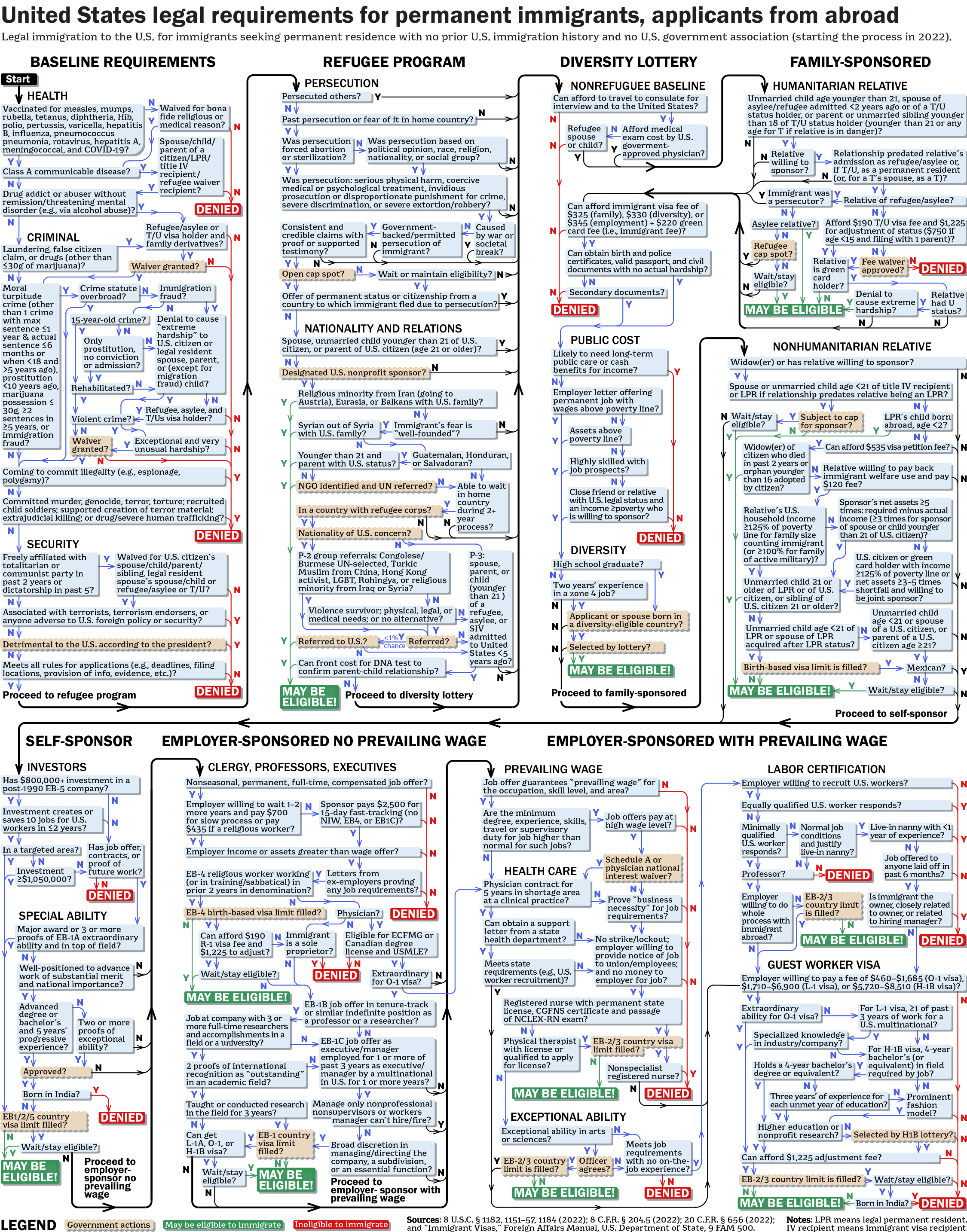
Rather than a rational system designed to favor the national interest or any other goal, Western immigration systems are accreted over time by blindly following the local incentive gradients that special interest lobbying creates. For such lobbying to matter, the special interests must have power and influence—which are the province of incumbents, not challengers. And it is declining incumbents (who have long since conquered their niche and ceased to innovate) that focus most organizational attention and resources on lobbying. Hence we should not be surprised to find that much Western immigration is designed to preserve declining incumbents.
I call this phenomenon mortmain migration, the dead hand of fossilized institutions reshaping demography to freeze themselves in amber in a world where their previous model no longer works. Almost all arguments involving the anti-concept of “labor shortages” fall under the umbrella of mortmain migration, as do most institution-linked visas.
Mortmain migration is conceptually similar to other forms of rent-seeking such as regulatory capture, some types of protectionism and demand for subsidies. But because demography is so important, it is far more destructive. The two groups most opposed to rent-seeking on principle are economists and libertarian-minded people. And I believe their cultural commitment to immigration is what has prevented them naming, describing and criticising this phenomenon. Opposition to mortmain migration should be much stronger than opposition to tariffs, regulation, subsidies, unionization or “industrial policy.”
Now that we have a definition of mortmain migration (namely the use of immigration to prop up obsolete institutions rather than reform or abolish them), it’s worth listing some examples to get a more concrete idea of what it is and why it’s so dangerous.
British mill towns
Britain had its largest sustained economic boom in history in the decades after WWII (though it was smaller than elsewhere in the Western bloc thanks to the democratic socialism of the Attlee government and its successors). A consequence of this boom was the decline of Britain’s labor-intensive textile industry, which lost out to cheaper imports from lower wage and/or more technologically sophisticated countries.
The textile industry could have invested in new machinery or come up with new organizational models to boost productivity. This is how the British textile industry was built in the first place, with historically positive consequences for Britain and the world at large. Alternatively, the government could have used some combination of subsidies and trade barriers to keep out foreign competition, or simply allowed the industry to decline in favor of imports, which is what happened eventually anyway. Instead, the textile industry lobbied for, and acquired, the ability to hire from the newly-independent Indian subcontinent, especially the Mirpur province of Pakistan—to lower wages.
This labor migration allowed Britain’s textile industry to preserve its organizational and technological status quo for a few years. But only for a few years. Temporarily suppressing wages did not stop the industry from contracting by two thirds between 1950 and 1970, and it was practically gone by 1980.
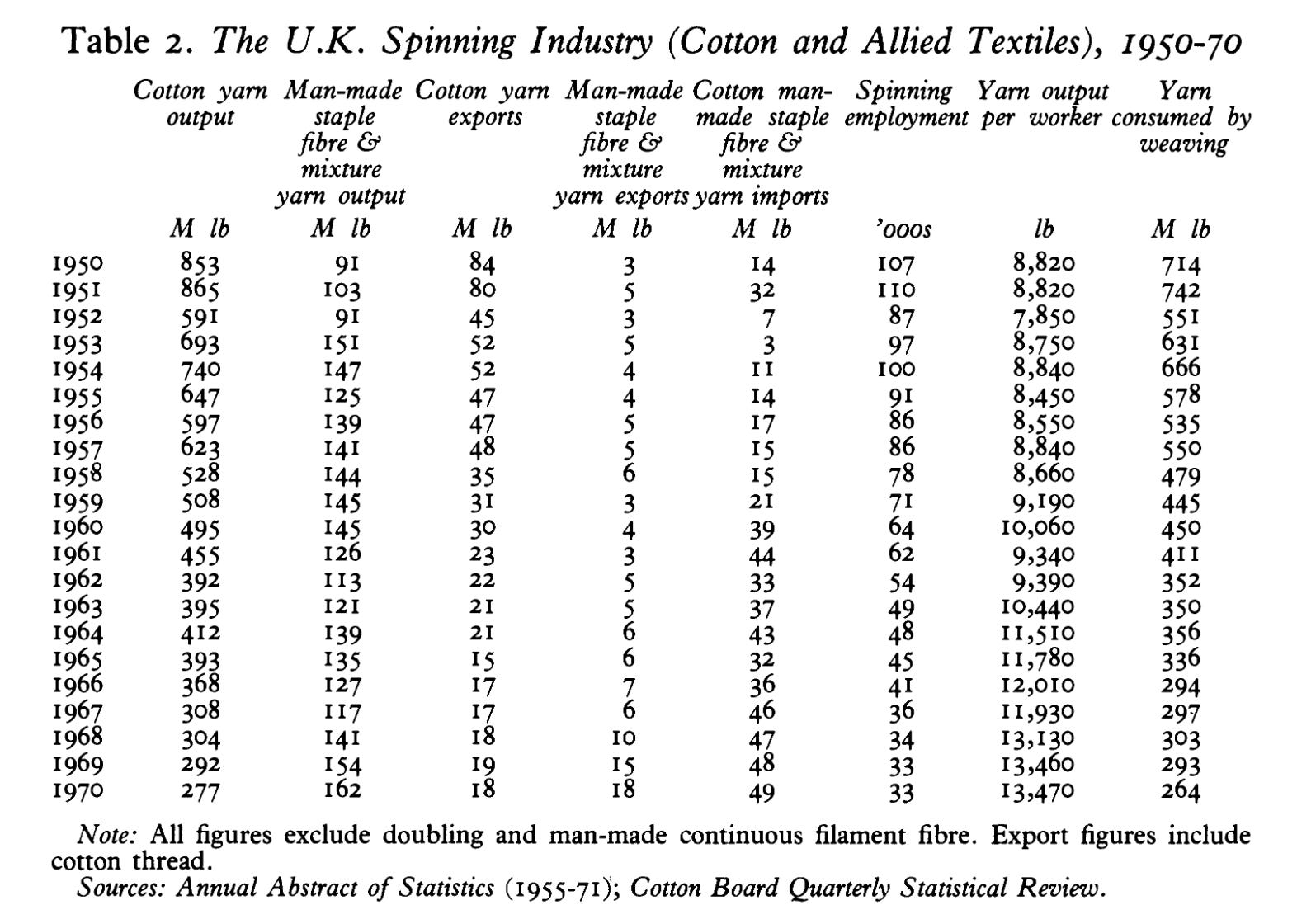
Britain paid, and continues to pay, a steep price for a few more years of keeping obsolete factories in business through migration rather than direct subsidies or more ordinary protectionism. The Pakistani diaspora created by this instance of mortmain migration is the source of Britain’s euphemistically-termed “grooming gangs,” really ethnic- and clan-based rape gangs2, responsible for a very large though unknown number of rapes going back to the 1950s (roughly 1400 victims, most of whom had been raped many times, in Rotherham alone between 1997 and 2023). Some of the rapists are explicitly motivated by racial revenge on the English—not that equal-opportunity rape would be excusable—and their crimes were concealed and aided by British institutions such as social workers, police, local governments and the media out of anti-racist ideology.
(The Yugoslav War-like atrocities committed by Pakistani rape gangs in Britain, perhaps the worst in any Western country since World War II, are far from the only problem caused by this particular migration wave. The standard issues of welfare use, clannish ethnic networks taking over local institutions, forging alliances with the political left, and general ethnic conflict turning all issues into a cold race war, are present as well. Even without the rape gangs, creating the Pakistani diaspora would still have been a huge mistake for Britain.)
Belgian coal mines
Something similar occurred in what is now Belgium’s Walloon Rust Belt. Thanks to the post-WWII economic boom raising Belgian wages, extremely labor-intensive Belgian coal mines started getting outcompeted by mechanized mines elsewhere. Rather than mechanize themselves or go out of business, the Belgian mining industry lobbied for, and received, both state subsidies and guest workers to preserve their business model, mostly from Morocco and Turkey. As with Pakistani millworkers in England, this wave of post-WWII guest workers served as a beachhead for chain migration. And as with the British textile industry, guest worker recruitment did not save Belgian coal. The last Walloon coal mine closed in 1984.
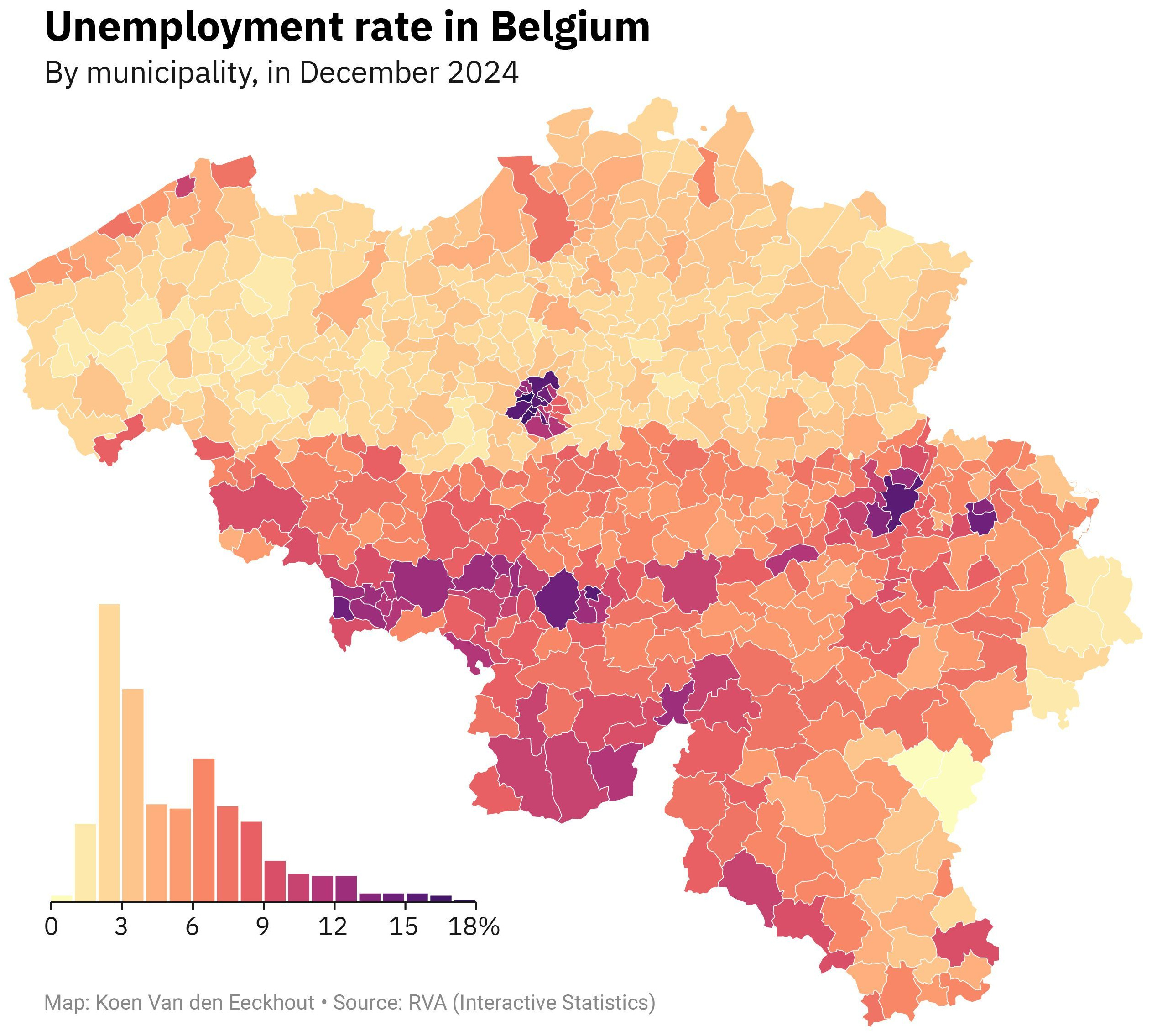
Belgian coal provides a good example of why mortmain migration is so much more destructive than more commonly-understood ways of propping up failing incumbents even in the absence of Rotherham-style atrocities. The billions of annual francs of direct state subsidies for the mines ended when the mines were closed, but the Turkish, Moroccan and other diasporas created by the guest worker program did not return home. The Muslim diasporas in Belgium, as in the rest of continental Europe, are highly criminal, left-wing and fiscally expensive.

In a continent strangled by regulation and weighed down by redistribution, Muslim voters comprise a reliable bloc vote for socialist parties—except where they are so numerous as to be able to dispense with the left entirely and create explicitly Muslim-sectarian parties (which also support massive redistribution) instead. This is not surprising, because such voters are overwhelmingly recipients of state largesse and have every incentive to demand more.
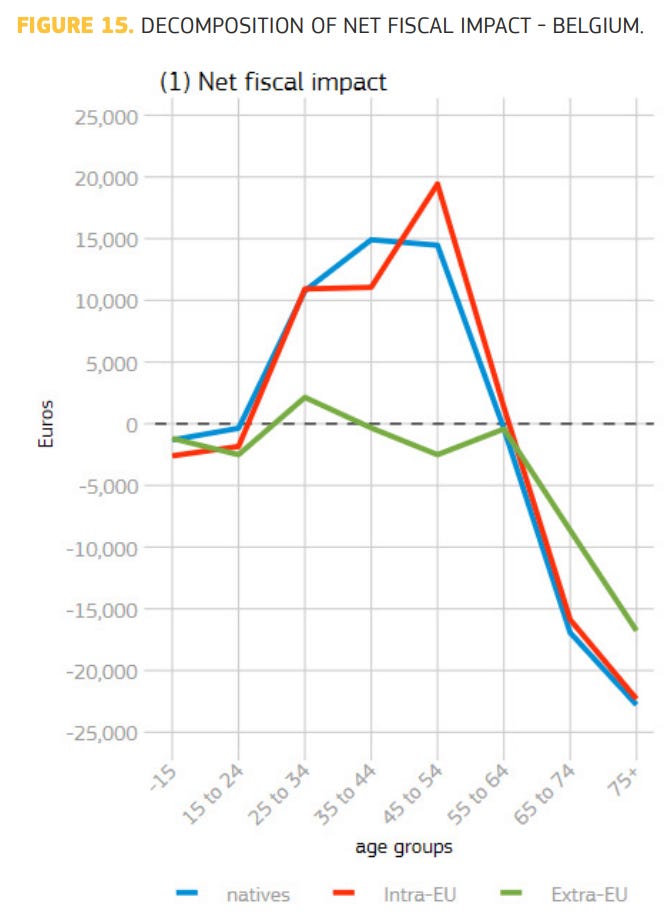
The Muslim diasporas of continental Europe, especially North Africans, also have high levels of criminality, several times greater than those of their white counterparts.
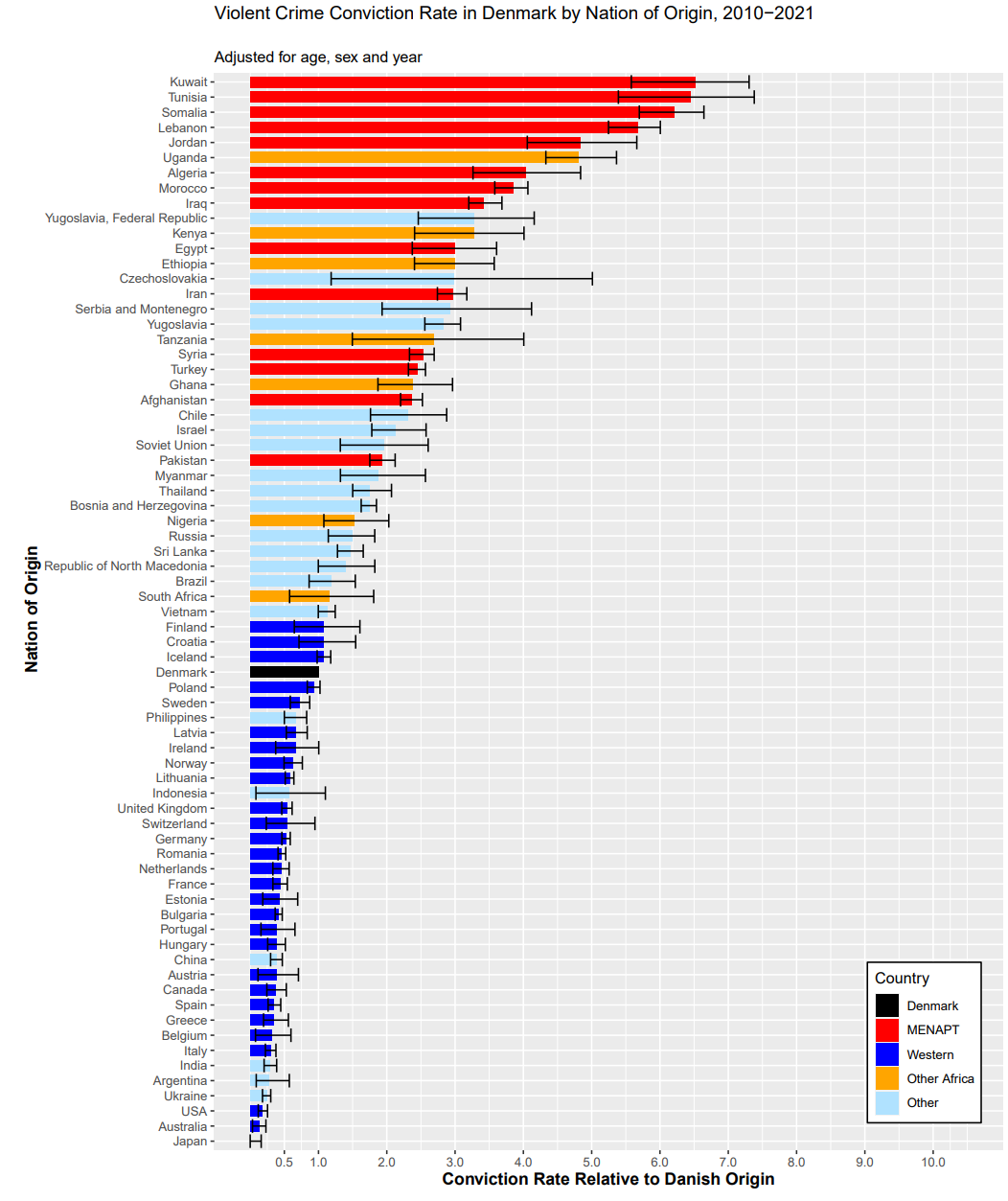
This is true of both individual and organized crime. North African drug gangs have turned Belgium into “Europe’s first narco-state,” complete with bombings and shootouts in the streets. This is partly downstream of lower average IQ, which even a perfect integration policy (something neither Belgium nor any other European country has) or widespread intermarriage will not fix.
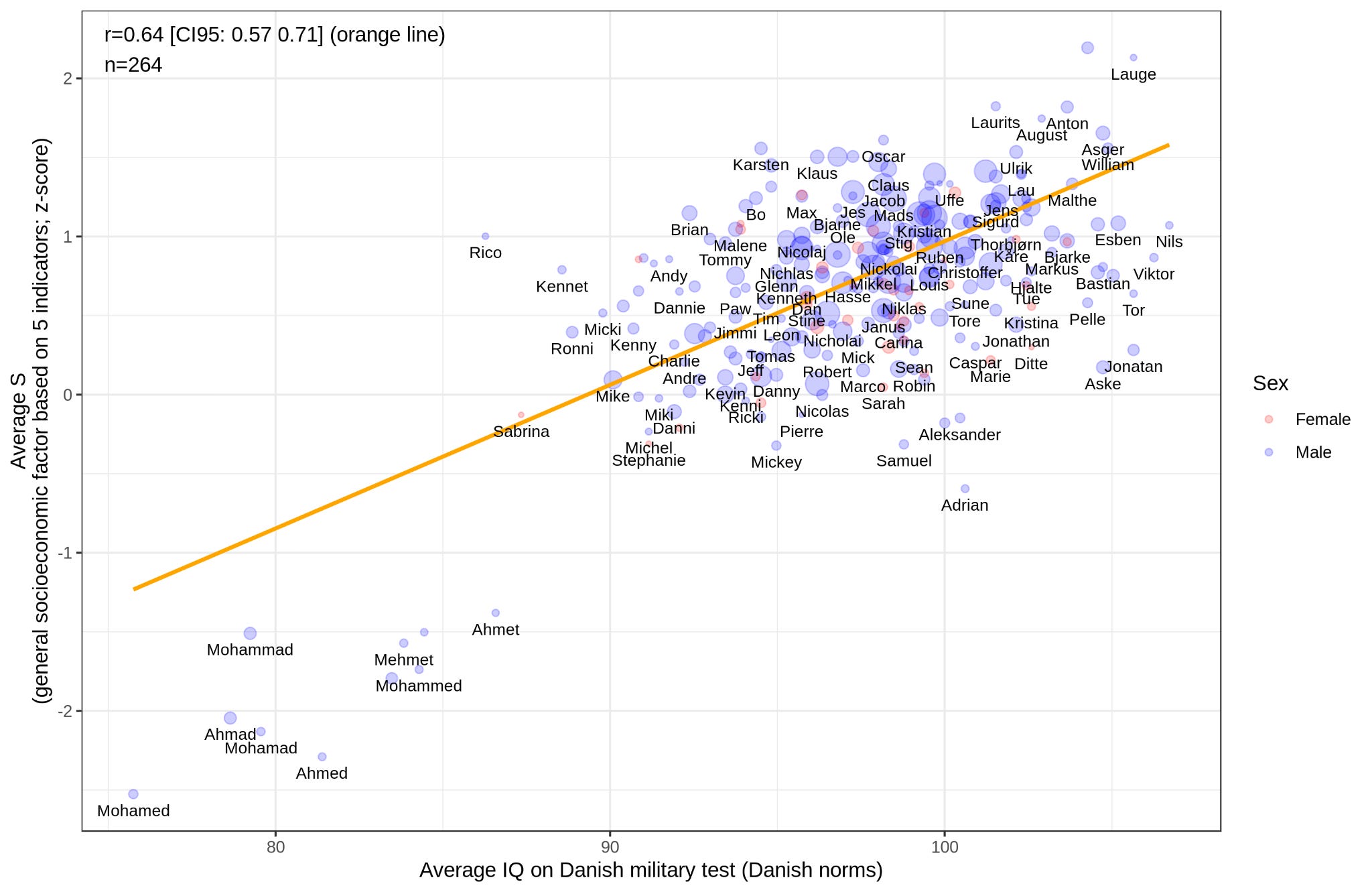
“Integrating Karim (25 ans) across the future lightcone” of your country is a poor trade for propping up pre-WWII mines for a couple of years, far worse than the direct subsidies that served the same purpose.
California’s Central Valley
In the United States and southern Europe, agriculture is one of the most important business lobbies for more immigration. No sector has mechanized more than agriculture has in the 20th and 21st centuries, and the remaining labor-intensive jobs tend to be strenuous and poorly paid, with little scope for easily improving conditions or payment because farmers are price-takers in a globally-competitive commodity market. On the other hand, it is certainly possible to automate more than is currently automated, or switch to less labor-intensive crops. Yet organized farmers’ groups tend to prefer lobbying for quasi-indentured Indian, North African or Latin American labor with few legal rights instead.
(It’s not an accident that agriculture is both heavily subsidized and protected as an industry, while also being one of the biggest lobbies for mortmain migration; both are ways to preserve incumbents in the face of innovation and competition and both rely on political power. It is typically institutions and industries that most rely on political favor that lobby hardest for mortmain migration, not dynamic sectors and actors.)
In the American Southwest, this has had similar results to the Belgian coal mining case. Farmers lobbied for, and received, uncapped agricultural visas that served as a base for chain migration. Politicians sympathetic to agricultural interests also turned a blind eye to decades of illegal immigration, which also served as a base for chain migration through the IRCA amnesty and birthright citizenship.
As a result, California’s Central Valley went from a solidly middle-class and socially healthy agricultural region to having social indicators similar to Mississippi, the most backwards part of the United States since the Civil War, thanks to Mexican agricultural migration. Victor Davis Hanson has written about what this process looked like from a ground level, from rampant littering to regular uninsured car accidents to having to drive off gang members at gunpoint.
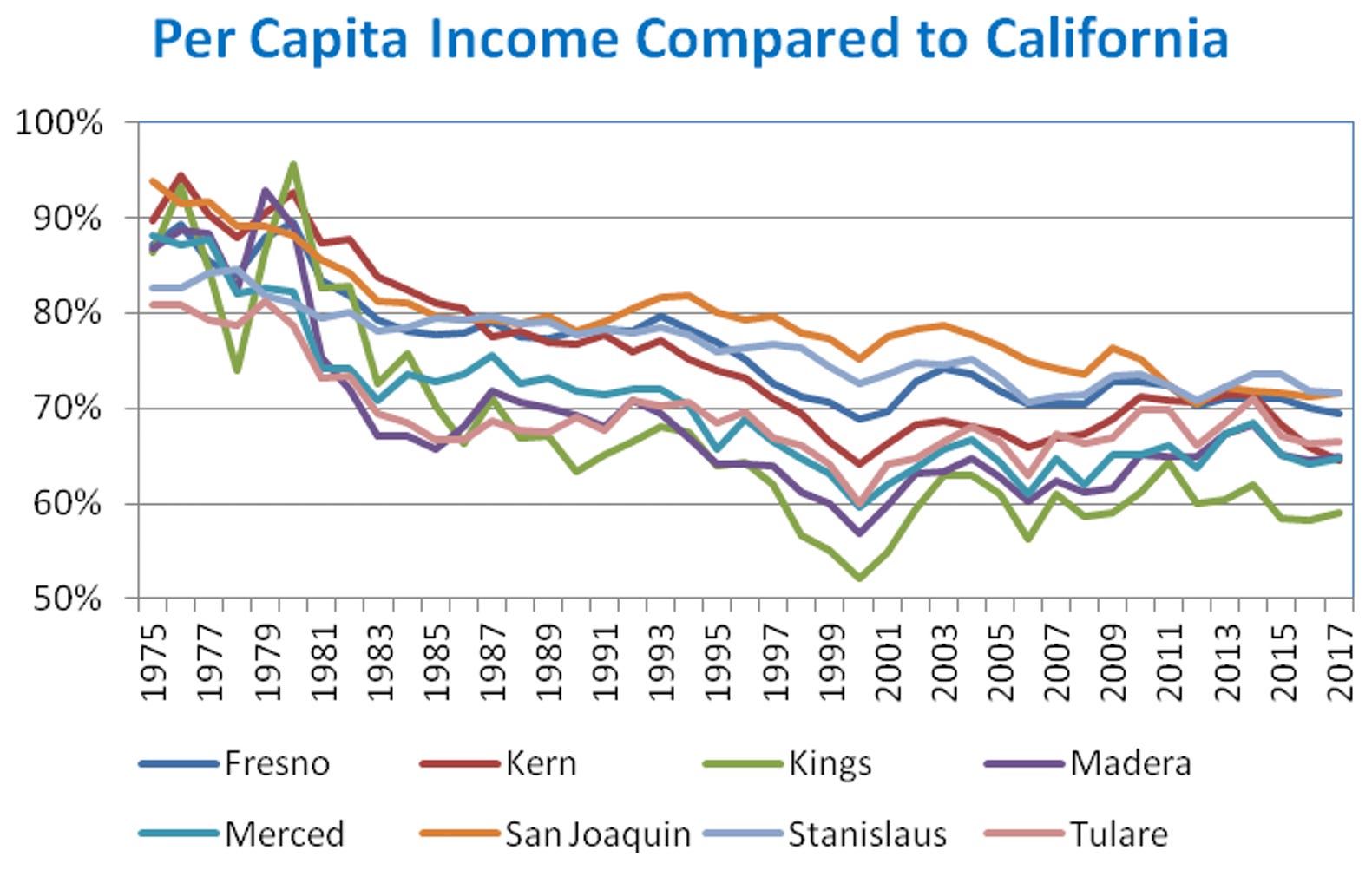
Unlike the Belgian mines or British mills, California agriculture has survived direct Mexican and global competition. But it did so through automation and capital-intensity, which made the Mexican laborers (imported to preserve their previous business models) redundant. Now the laborers and their citizen descendants are a permanent fiscal drain on the rest of the state and country (because of low Mexican IQ), and a reliable bloc vote for the California Democratic establishment, a ludicrously incompetent and corrupt set of institutions even by the low standards of US state governments. Slightly delaying farm automation by making the US Southwest, and the US as a whole, more similar to Mexico, is a terrible trade.
Churches
The previous examples were all business lobbies looking to preserve a particular employment model without resorting to automation, better organization or raising wages. But businesses are not the only institutions that turn to mortmain migration to avoid innovating or expiring. In both the United States and Europe, every generation since the 1970s is more secular than the last. This threatens most existing Christian denominations. There are still many Christians, but committed congregants grow rarer every year.
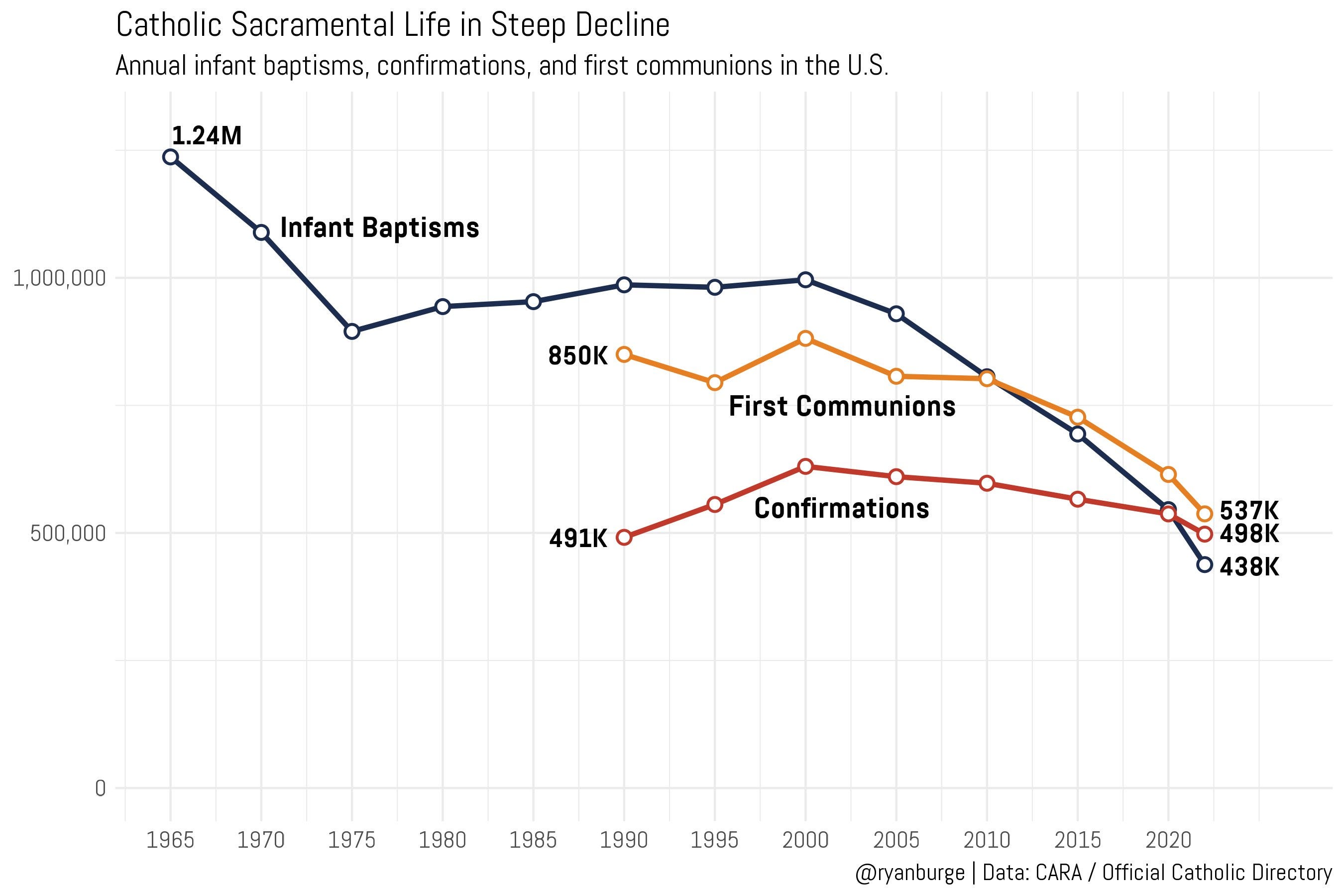
Some possible responses are organizational, lifestyle or theological innovations that make participation more attractive. Many ultra-Orthodox Jewish and some Christian groups have successfully made such changes. Another response, however, is to import new congregants from more backwards societies that have not yet secularized.
For this reason, a common refrain from religious figures is that without migrants no one would fill the pews. For example, Pope Leo XIV has praised migrants for revitalizing the Church with their “spiritual enthusiasm and vitality.” Catholic Archbishop Edward J. Weisenburger similarly advocates migration in order to “revitalize parishes.” This sentiment is not limited to the Catholic Church; Protestant figures make the same argument in the United States and Europe, and so do Mormon ones. By making this argument, these institutions damn themselves. Claims that migrants are required to revitalize churches are admissions that these churches are incapable of inspiring faith in Americans or Europeans, and that the United States and Europe truly are post-Christian rather than merely in an impious era.
Moribund religious organizations don’t just resort to mortmain migration to supply parishioners, they also do so to acquire money. The funding model for many religious organizations has gone from tithes or donations or fees from congregants, which requires organic appeal, to farming government grants for providing services to asylum seekers.
As usual with mortmain migration, this does not work in the long run. The children of immigrants are exposed to all the same national and global influences as their native peers, and abandon the faith themselves. Plus, the source countries are secularizing or converting to more vital faiths capable of proselytizing and retaining believers. Long-run survival of these churches and denominations requires successfully grappling with 21st century secularism. But it’s much easier to avoid innovation by putting the day of reckoning off for a decade through mass migration.
Universities
Churches are not the only form of non-profit institution to resort to mortmain migration rather than reform in the face of obsolescence. Many second and third-tier Western universities face financial difficulties thanks to some combination of falling student populations (owing to the ~1970 fertility collapse or “Second Demographic Transition”) and less willingness of students and governments to pay.
The main things most universities offer prospective students are credentials (not skills or learning) and class commitment, and both are threatened by the enormous expansion of higher education in the 20th century and deliberate promotion of incompetents and “strivers” (by which I mean those who pursue money and status through Goodhart’s-law style gaming of gatekeeping criteria) by university admissions committees. For these reasons, only a small number of universities widely recognized by HR departments can rely on credentialing alone to stay afloat.
Until now, universities have been sheltered from these pressures due to rivers of public money and enormous tax advantages, but this lifeline is threatened by the (correct) perception of universities as partisan actors rather than neutral truth-seeking institutions, and their (justified) loss of popular legitimacy and authority. And the unlimited expansion of administration to absorb all available rents means no level of public funding or protection from taxation or competition (by making accreditation difficult and limiting public funds to accredited institutions) can satisfy university management forever.
What many3 universities have discovered is that rather than selling credentials, they can use their franchised power over student visas4 to sell access to their host countries, transforming themselves from (ostensibly) institutions of education to purely rent-seeking visa mills.

Many people wish to move from poorer to richer countries, and are willing to pay to do so. Richer countries are mostly richer through some combination of average IQ, natural resources, institutions and culture more conducive to mutually-beneficial transactions, infrastructure/land/capital, and historical path-dependence—all advantages diluted by most migration. Universities privileged with the ability to grant visas allowing access to these things are capturing some of the benefits (which otherwise mostly accrue to the migrants themselves) and socializing the costs of this dilution. If citizenship, or access to the land, capital and institutional commons of a country are to be sold, they ought to be sold by the government, not by private actors.
Visa mills are a huge problem across the Anglosphere, especially in Canada, Britain, and Australia. 2.2% of the entire population of Australia5, and 9% of the 20-34 population, is on student visas. The mirror image of this is that 1 out of every 50 Bhutanese was on a student visa in Australia in 2024. It is less demographically significant in the US, but still a major issue, and defunct universities, along with employers who benefit from tax-favored and quasi-indentured labor, are constantly lobbying to make it worse.
Local governments
Many towns are based around a single entity, whether that be an employer or factory or mine. Not everyone in the town will work for this entity, but it provides the “exports” to the rest of the country or world required to “import” everything not created locally—and thus supports the broader service/government/construction/retail local economy. If and when this entity goes bust, whether because a mine dries up or outside competition undermines the factory, the town naturally disappears, as it no longer provides anything to the rest of the world, and the inhabitants migrate elsewhere. This geographic equivalent of creative destruction is a normal and nationally-positive process in any dynamic country.
This intersects with mortmain migration in the common argument that immigrants will revitalize “left-behind areas.” For example, Adam Ozimek argues for “Heartland visas,” geographically restricted visas for migrants to settle in depopulating counties subsidized by the federal government. I bring up Ozimek not because he is an especially egregious proponent of this view but because he is well-known for arguing against protectionism and subsidies for favored industries in other contexts. This combination of views—that propping up declining local industries with subsidies and protecting them with tariffs is unconscionable, but propping up declining municipalities with geographically-targeted migrants bringing in state or federal tax dollars is wonderful—is common among supposedly market-friendly political writers and organizations such as the Cato Institute. Similar arguments are made in Scotland, Australia, Germany and Japan.
I must emphasize the difference between local governments and local residents, because they are often conflated using weasel-words like “community.” Organic representative local governments largely died out in the 20th century6 due to nationalizing and globalizing communications technologies. Today, local governments tend to be dominated by professional state-funded activists, major property owners or both. The former tend to be ideologically committed to migration and are paid to provide services to “asylum seekers,” while the latter directly benefit from higher rents. It is better to model most local governments as viewing their residents as a tax base and customers for their services than as truly constituted by them. Thus there is no contradiction between a particular wave of migration (for example, Haitians in Springfield, OH) benefitting the local government and harming local residents. When alienists write about migration preserving local communities, they mean preserving the municipalities by replacing the actual local communities as tax- and customer- bases.
Some countries have already institutionalized this type of migration. Canada has programs specifically to promote immigration to the Atlantic provinces and to northern and rural areas. Spain has a similar program for depopulating rural municipalities. Again, notice the focus is on propping up existing municipalities declining because they have no reason to exist in the modern world. Italy has the “Riace model,” named after the Calabrian town of Riace, whose mayor decided to offset a declining local population by turning Riace into a center for hosting refugees. This model is bad for Italy as a whole, which must pay the gargantuan costs of non-European migration, and for the prior inhabitants of Riace, but very good for the local government itself.
There are two ways in which immigration can provide “export industries” for declining municipalities. The first is a special case of the more general employment form of mortmain migration—by temporarily keeping wages down for enterprises that cannot adapt to rising ones, as with the British mill towns and Wallon coal mines previously described. This is bad. The second is that immigrants, especially refugees, bring with them national (and in the US, state) tax dollars. This is worse. Unlike the mill towns or coal mines, which did at least continue to supply the rest of the country and the world with textiles and coal for a few years at huge cost, paying for refugees to mill around in a declining town for a few years is pure drag at the national level. The result is a twisted parody of 1920s economic geography, with local industries replaced by grant-farming. The world Beltway libertarians want!
As with other forms of mortmain migration, this does not work in the long term. Immigrants and their descendants leave for the same reasons natives do once they are legally able to move. A serfdom-like arrangement, where successive generations of foreigners are tied to the land to farm central government grants to preserve municipal tax bases, is not a realistic possibility. But it can kick the can down the road for a few years and is thus attractive to local governments desperate for institutional survival. It is also attractive to a certain type of “liberal” who sees in it the opportunity to weaponize concentrated benefits (for the local governments) and diffuse costs (for the residents and the country) to plant ethnic client blocs in conservative rural areas.
Medical occupational licensing
The US licensing pipeline for doctors is extremely long. Would-be doctors must complete a mostly irrelevant four-year undergrad degree before four more years of medical school and then three to seven years of residency. This is unusual and wasteful. Only the US and Canada require the four-year undergraduate degree, and American and Canadian-trained doctors are not notably more competent than their Swiss or Japanese counterparts. As a result, US-trained doctors only begin earning market wages in their 30s, usually after having accrued large debts. The need to pay doctors very high wages to justify this is part of why US healthcare is expensive.
Worse, the US doctor pipeline is restricted by regulatory fiat in several places. The two most important are medical school admissions and residencies, the latter capped by law in 1997. Medical schools must be accredited by the Liaison Committee on Medical Education (LCME), and so cannot be easily expanded due to higher demand for doctors. The LCME also demands discrimination against Asian and especially white men in medical school admissions as a condition of accreditation, as does the accrediting body for residency slots, the Accreditation Council for Graduate Medical Education (ACGME). These restrictions create genuine labor shortages that cannot be solved through market adjustment.
Effectively, this is a transfer from American consumers of healthcare (almost everyone) and young potential doctors (who must wait until they’re in their 30s to start making serious money) to college administrators (who benefit from would-be doctors needing superfluous credentials for medical school admissions) and older incumbent doctors (who benefit from state restrictions on supply and subsidies for demand, leading to extremely high earnings late in life).
The reforms that would alleviate these doctor shortages are obvious: build more medical schools (perhaps by creating more accrediting bodies), fund more residency slots, and eliminate the de facto four-year undergraduate degree requirement. Abolishing privileges for women (who work fewer hours on average) and non-Asian minorities (who are less competent on average) at every stage of the pipeline would also help. This would allow for more and better US-trained doctors at lower cost.
But reforming a broken medical training system, like reforming an obsolete industry or church or university, is difficult. The easy thing to do is to temporarily alleviate the shortage by recognizing foreign credentials as equivalent to US ones. This does not solve the doctor shortage problem—the major sources of foreign doctors usually have dubious credentialing pipelines—and hurts US-trained doctors, who go through the overly-long and restricted US pipeline and then face competition from shorter and lower-cost pipelines. But unlike institutional reform, it’s easy to do and allows politicians to satisfy three concentrated interests: incumbent professionals, incumbent credentialing institutions, and immigrant ethnic lobbies.
(More extreme examples of this occur in Britain and Ireland, where large fractions of locally-trained doctors end up practicing overseas and are replaced with qualitatively much worse foreign-trained doctors.)
Conclusions
What is immediately obvious from this list of examples is that mortmain migration rarely works for long. When used to preserve companies and industries through low wages, the migrants or their children quickly join national labor markets and/or gain access to the welfare state and leave. When used to prop up churches, migrants’ children join the secularizing national culture and leave. When used to prop up local governments with no other reason to exist, migrants eventually get freedom of movement and leave. It is what mediocre and uncreative managers resort to because they cannot think of, or are too lazy to implement, alternatives—trying to put off the day of reckoning for a few more years. And once the institution responsible for the migration goes under anyway, the migrants remain, leaving the rest of the country to pay the price of this brief delay forever.7 Mortmain migration is one of the worst forms of privatizing benefits while socializing costs.
And this list is by no means comprehensive. A few other cases of mortmain migration:
Left-wing subnational and local governments/party machines, whose destructive policies drive massive internal emigration, using international migration to import a new electorate and maintain their political power.
Businesses investing less in automation the more refugees are in the area. To a first-order approximation, cheap labor nations have been getting dominated by technologist capital-intensive nations for centuries.
The delusional hope of politicians and budget offices that immigration can be used to maintain 20th century pensions, healthcare, and welfare states premised on constant population growth and rising productivity without having to implement unpopular reforms.
The Atlantic slave trade, which began as a way for Old World would-be idle landowners to maintain their labor-intensive lifestyles in the labor-poor New World.
The left-wing urban synthesis of “we need immigrants to drive Uber” and “we need to ban self-driving to protect Uber drivers.”
Jurisdictions, such as California, with extremely restrictive labor regulations at the low end of the market (which exclude unskilled and young legal residents looking for formal entry-level jobs) that rely on illegal immigrants working informally under the table to make the system work, rather than reform their labor laws. The long run effect of this is Latin America or India-style extremely informal job markets with very low productivity and lack of fair, impartial institutions.
Once this pattern is named and made salient, you see it everywhere.
Still, I don’t want to leave the impression that there are no forms of immigration that promote dynamism. The foreign experts model can be used to create new industries, and the Gulf States guest worker model has built gleaming modern cities in the desert. Historically, steamship-era European migration to the United States did not just provide cheap labor for existing enterprises and social models, but also enabled new Fordist techniques of mass production combining a huge, un- or semi-skilled and disciplined workforce with massive capital investment and raw material inputs. Fordism would revolutionize the world, mostly for the better, in the 20th century. European migration to Latin America and Africa in the 19th and 20th centuries brought desperately needed technical expertise, entrepreneurialism, and better government.
But while pro-positive dynamism migration is certainly possible, the political economy of immigration in the West today makes mortmain migration the norm. As a rule of thumb, public-minded individuals and politicians should always oppose appeals to use migration to prop up some existing industry or institution. Organizational or technological reform is ideal, but even prompt liquidation is far better than mortmain migration, especially since an institution dependent on migration will rarely last long anyways. If appealing to special interests is required—and it often is for politicians—subsidies, regulatory favoritism and protectionism are all much better than giving them control over migration policy.
Arctotherium is an anonymous writer interested in demographics and the future of civilization. You can find more of his writings at his blog Not With A Bang or at his Twitter.
Become a free or paid subscriber:

Like and comment below.
Reading this book felt like a time capsule, and not in a good way. Some books from the 1990s (such as Vernor Vinge’s A Fire Upon the Deep or Alien Nation by Peter Brimelow, who Postrel attacks as an archetypal “stasist” for his views on immigration) or even earlier (such as Edward Ross’s 1911 book The Changing Chinese) are eerily prescient. But the thesis of The Future and Its Enemies, that the real political divide was not between left and right but between “dynamists” and “stasists,” is dead wrong and could only have been a product of the brief moment between the end of the Cold War and the Great Awokening.
The book is not interesting or important enough for a proper review, but one example Postrel uses to support her thesis is left-wing environmentalist groups’ support for immigration restriction. A few decades later, however, and the environmentalists are part of the homogenous left-wing blob like every other group, as someone using a simple left/right model could have predicted. A couple of other things I noticed: Postrel was in favor of the transfer (and it is a transfer because, unlike explicit knowledge, tacit knowledge can’t be easily duplicated) of American scientific expertise to Asia and to Asians in the US, seeing it as an analogous to the European/American transfer of the 20th century. Postrel also writes favorably of the Cambodian takeover of donut shops in Southern California; to the naive libertarian, the transformation of a former market society into an India-like caste system full of nonlinear ethnic niches is something to be celebrated.
The Future and Its Enemies is of historical interest for describing a particular worldview that was once important, 90s techno-libertarianism, but no more.
Not all universities lobbying for large numbers of foreign students are examples of mortmain migration. Harvard, for example, is not reliant on foreign students to pay the bills. It is making a deliberate ideological decision to distribute around a quarter of its highly-coveted and rationed places to international students. It is second- and third-tier institutions that most rely on mortmain migration. This is also true of institution-linked labor migration. Tech hyperscalers are major lobbyists for some visa types, but they would not go out of business and probably wouldn’t even need to make major reforms without them, unlike the British mills, Belgian mines and California farmers previously discussed. On the other hand, body shops like Infosys are entirely reliant on constant inflows from India.
This is akin to the ubiquitous state-granted licenses and monopolies of early modern governments.
Student visas are sometimes wrongly framed as “services exports,” but that’s only the case if they’re being paid for with money earned elsewhere. Often, they are paid for through very low wage informal or illegal work in the country of destination. With remittances, this has the same foreign exchange effects as imports not exports, and so student migration accomplishes the opposite of what its boosters claim.
Extraordinarily low levels of participation in local elections is sufficient to demonstrate this. Almost everyone today knows and cares far more about national-level politics (or even global politics; most Canadians care more about Trump than their mayor). This is the reverse of the pre-television situation, where due to high communications costs most people knew far more about their local situation than the national one. This is why pre-television arguments for local government, while often valid in their time, are wrong today.
Consider what nieghbourhoods populated by the descendants of slaves are like today, centuries after the fact. In the US, these include many of our former urban crown jewels, and it’s similar in places like Brazil and the Caribbean.
This is a superb article, and Arcto continues to be one of my favourite authors. It's all good, but I'm in fist-pumping agreement on the medical sector in particular.
I'm a little leery about relying on automation to advance industrial or national advantage, since I do think the limit case tends toward either Idiocracy or Skynet, depending on whether military engagements are involved. Unfortunately there may not be an obvious way to hold back the AI arms race without something resembling global government.