


Written by Noah Carl.
Western Europe and its offshoots (the US, Canada etc.) have gone further than any other countries in embracing “diversity” and admitting culturally dissimilar migrants. Both of America’s two largest states, California and Texas, are now majority minority. More than 40% of school children in the Austrian capital of Vienna identify as Muslim. Out of 25 players on the French national football squad, only five are of European ethnic origin. And leading institutions in North America openly discriminate against white men.
Western Europe and its offshoots also score lowest on measures of racism. For example, the World Values Survey asks respondents whether they would dislike having “people of a different race” as neighbours.1 West Europeans, North Americans and Anglo-Oceanians are among the least likely to say that they would. People in Eastern Europe, the Middle East, Asia and Africa are far more likely to answer in the affirmative. (South Americans resemble West Europeans in their answers, which makes sense given that many have Spanish, Portuguese or Italian heritage.)
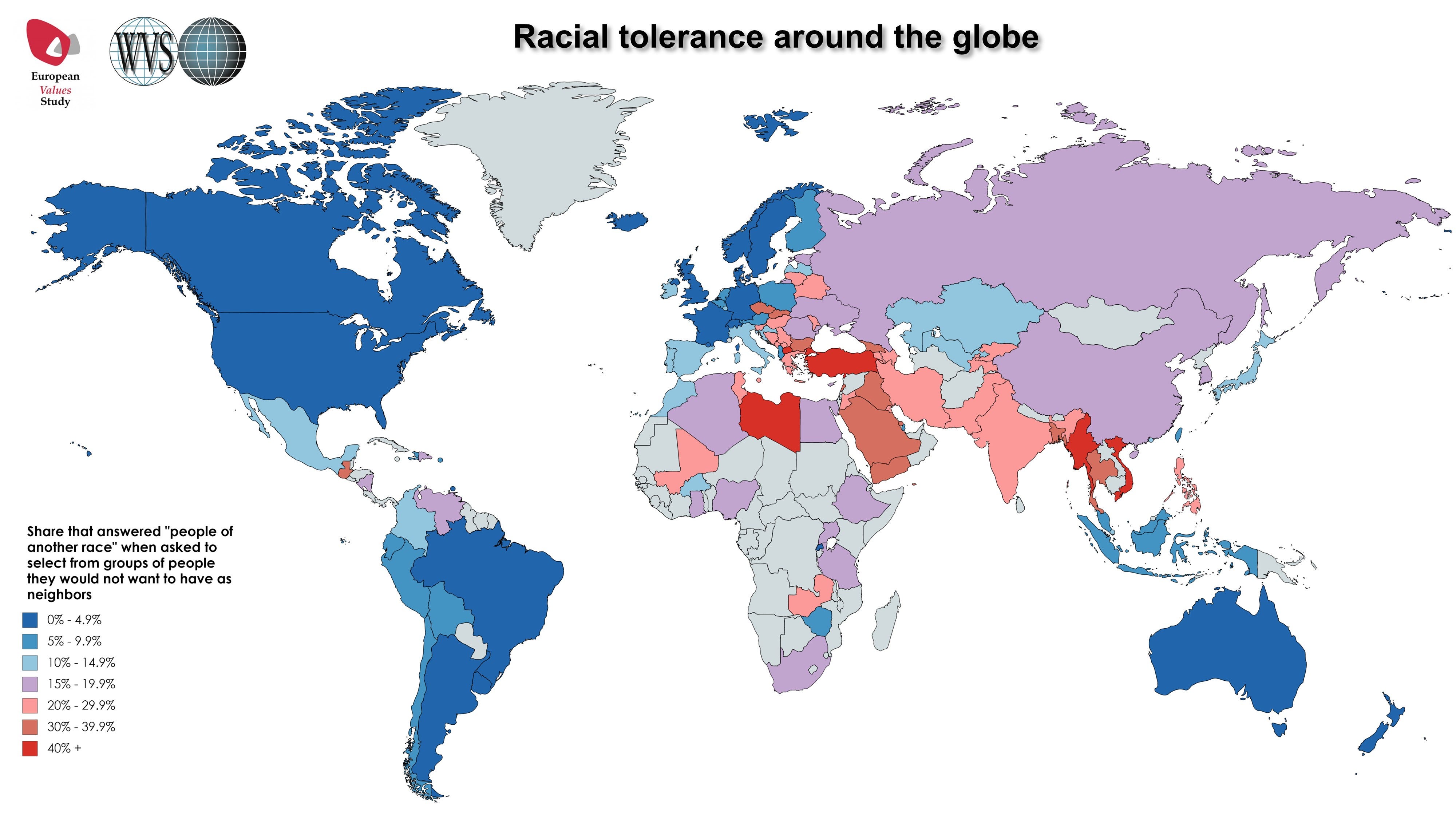
Not only that, but Western Europe and its offshoots consistently come lowest on measures of nepotism and in-group orientation. As Joe Henrich writes in his book The WEIRDest People in the World, “WEIRD people show relatively less favoritism toward our friends, families, co-ethnics, and local communities than other populations do”.2
All this evidence has led some scholars to suggest that West Europeans are selected, culturally and genetically, for lower ethnocentrism—that they’re simply less ethnocentric than other populations. Kevin MacDonald makes this case in his book Individualism and the Western Liberal Tradition. Ed Dutton puts forward similar arguments in Race Differences in Ethnocentrism. And while Henrich doesn’t use the term “ethnocentrism”, he does claim that WEIRD psychology (including less favouritism toward co-ethnics) came about through a long process of cultural evolution, beginning in the 4th century.
Each of these authors has a slightly different theory for the origin of low West European ethnocentrism (though they share common elements). But I won’t get into the details here. The point is that all three suggest that low West European ethnocentrism is something that emerged gradually over many centuries of cultural and/or genetic evolution. Which seems to imply that, by the 20th century, West Europeans had a relatively weak disposition toward ethnocentrism.3
The problem with all these theories is that there’s one huge, glaring counter-example: Nazi Germany (along with related movements in other parts of central Europe). Nathan Cofnas has raised this point in one of his papers:
Germans in 1933 presumably would have reported very high levels of ethnocentrism in a survey … Now it is taboo to express such opinions. In 1933, Germans elected Hitler. In 2005, Germans with basically the same genes as their grandparents elected Angela Merkel, and largely supported her project of bringing in (what will end up being) millions of nonwhite immigrants.